Portugal SS3.0 spindelkran transaktionsfall
27 februari 2026
Leveranstid: 15 dagar
Fraktmetod: Sjöfrakt
Betalningsvillkor: 50% T/T förskottsbetalning, 50% T/T före leverans
Exportland: Portugal
Leveransvillkor och destination: CIF LEIXOES, Portugal
Första kontakt med kund: 2024-11-11
Produktnamn: SS3.0 Spider Crane
Lyftkapacitet: 3t
Driftsmetod: Sensorkontroll + Fjärrkontroll
Spänning: 400V 50Hz 3Ph
Antal: En enhet
Denna portugisiska kund är en distributör som planerar att köpa en 3 tons spindelkran för återförsäljning på sin lokala marknad. Tidigare specialiserade sig kunden på grossistförsäljning av verktygsmaskiner och hade erfarenhet av att leverera industriell utrustning till tillverkningskunder. De var redan bekanta med spindelkranar och hade sålt och använt välkända japanska och italienska varumärken, vilket innebar att deras förväntningar på produktkvalitet och prestanda var mycket höga.
Efter att ha förstått deras affärsmodell och målmarknad, gav vi en detaljerad offert baserad på CIF-villkor, inklusive tekniska specifikationer, lyftdiagram, konfigurationsdetaljer och beräknad leveranstid. Eftersom kunden var mycket kvalitetsmedveten och van vid premiumprodukter från Europa och Japan, tvekade de inledningsvis att byta leverantör.
För att stödja deras utvärdering tillhandahöll vi omfattande dokumentation, inklusive CE-certifikat, listor över komponentmärken, belastningstestrapporter och europeiska exportfall. Trots detta tyckte kunden fortfarande att priset var något högt. För att visa uppriktighet och potential för långsiktigt partnerskap erbjöd vi ytterligare en rabatt på 2%. Även om kunden förblev försiktig spelade fortsatt kommunikation en nyckelroll.
Under de följande veckorna delade vi med oss av ett flertal framgångsrika exportcase, särskilt projekt som levererats till europeiska länder, tillsammans med kundfeedback och videor om driften. Gradvis fick kunden förtroende för våra tillverkningsstandarder och kvalitetskontrollsystem. Så småningom accepterade de erbjudandet och bekräftade beställningen.
Det här projektet återspeglar vår förmåga att vinna över erfarna distributörer genom transparens, beprövad prestanda och konsekvent kommunikation.
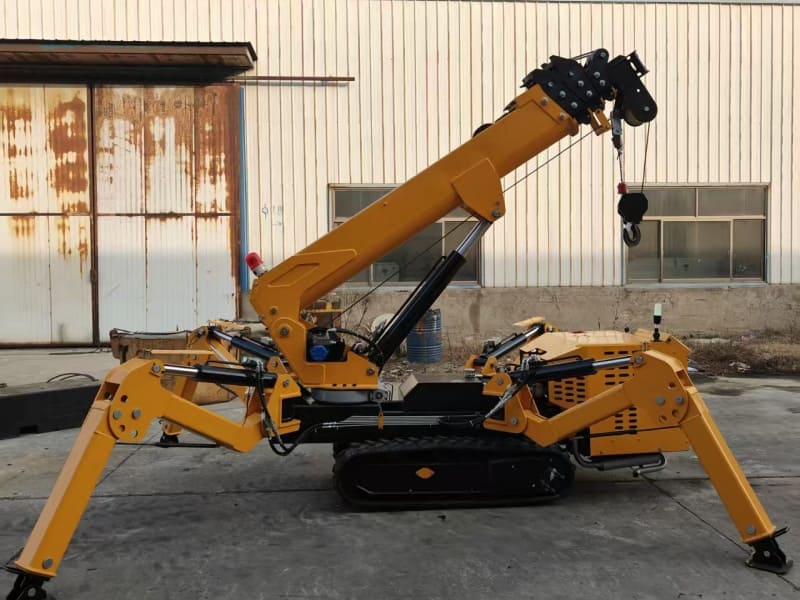
Skillnader mellan spindelkranar och konventionella kranar
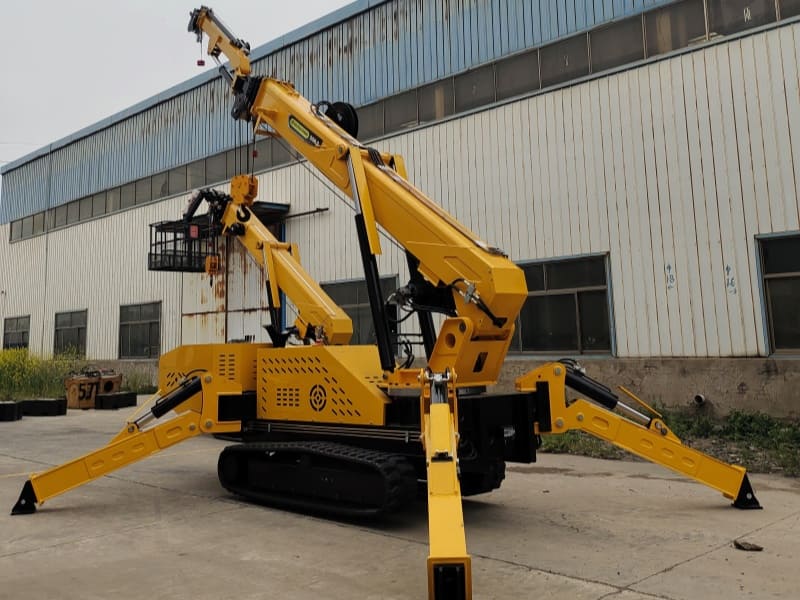
Elektriska spindelkranar skiljer sig avsevärt från konventionella kranar i struktur, tillämpning, flexibilitet och driftsmiljö. Att förstå dessa skillnader hjälper distributörer och slutanvändare att välja rätt lyftlösning.
♦Storlek och tillgänglighet: Elektriska spindelkranar är kompakta och lätta. De kan passera genom smala dörröppningar, hissar och trånga inomhusutrymmen. Konventionella kranar – som lastbilskranar eller stora mobilkranar – kräver mycket större arbetsytor och har inte lätt åtkomst till begränsade miljöer.
♦ Utriggardesign: Elektriska spindelkranar har justerbara stödben med flera vinklar som liknar spindelben, vilket möjliggör stabil drift på ojämna eller sluttande ytor. Traditionella kranar förlitar sig på större, fasta stödben och kräver mer öppen, plan mark.
♦ Användningsmiljö: Mobila spindelkranar är idealiska för inomhusinstallationer, takarbeten, installation av glasfasader, positionering av utrustning och trånga byggarbetsplatser i stadsmiljö. Konventionella kranar är bättre lämpade för öppna byggarbetsplatser och tunga lyftuppgifter utomhus.
♦ Transport och uppställning: Mobila spindelkranar är enkla att transportera med små lastbilar eller släpvagnar och kan snabbt monteras. Stora kranar kräver komplex logistik, transporttillstånd och längre uppställningstider.
♦Precision och kontroll: Mobila spindelkranar använder vanligtvis fjärrstyrningssystem, vilket gör det möjligt för operatörer att stå på säkert avstånd och uppnå exakt positionering. Traditionella kranar kan använda hyttstyrningssystem och är mindre lämpliga för ultraprecision inomhuslyft.
♦ Kraftalternativ: Många spindelkranar erbjuder dubbla kraftsystem (diesel och el), vilket möjliggör både inomhus- och utomhusdrift. Konventionella kranar är i allmänhet dieseldrivna och mindre lämpliga för inomhusmiljöer.
♦Kostnadseffektivitet: För små till medelstora lyftuppgifter i begränsade områden är spindelkranar ofta mer ekonomiska på grund av lägre transport-, arbets- och platsförberedelsekostnader.
♦ Lyftkapacitetsområde: Medan konventionella kranar dominerar extremt tunga lyftoperationer, erbjuder spindelkranar stark lyftkapacitet i förhållande till sin kompakta storlek, vanligtvis från 1 ton till 12 ton.
Sammanfattningsvis, spindelkranar är konstruerade för flexibilitet, precision och prestanda i trånga utrymmen, medan konventionella kranar utmärker sig vid storskaliga lyft med hög kapacitet utomhus. Var och en har sina fördelar, men för specialiserade och begränsade miljöer erbjuder spindelkranar en unik och mycket konkurrenskraftig lösning.

 Svenska
 English
 Русский
 Español
 Қазақ тілі
 Português
 العربية
 Français
 Deutsch
 ไทย
ไทย
 Bahasa Indonesia
 Bahasa Melayu
 Tiếng Việt
 한국어
한국어
 Italiano
 Afrikaans
 Nederlands
 Norsk bokmål
 Български
 עִבְרִית
 Polski
 Čeština
 Hrvatski
 Lietuvių kalba
 Română
 Slovenščina
 Slovenčina
 Türkçe
 Dansk
Dansk
 Ελληνικά
 فارسی
فارسی
 Suomi
Suomi
 简体中文
简体中文
 O‘zbekcha